You’ve been hearing/ reading all about swim spas and hot tubs and now you’ve narrowed it down to two options. Both sit in your backyard. Both heat up. Both let you soak. But they’re the same thing, and buying the right one to suit your family needs shouldn’t be a regretful decision.
Read on below you’ll get the ‘real breakdown’: what each product actually does, approx cost comparision, what it demands from your space and budget, and which type of Utah homeowner each one genuinely serves.
What Is a Hot Tub, and What Does It Actually Do Well?
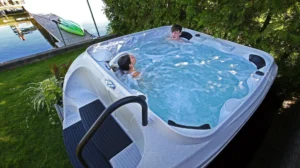
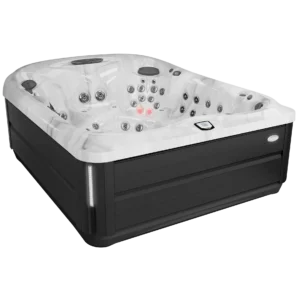
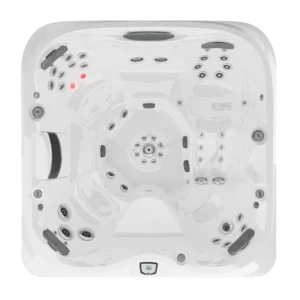
A hot tub, or portable spa, is a self-contained vessel of heated water, typically holding 200 to 500 gallons, with a jet system designed for therapeutic massage and relaxation. Most models seat two to eight people. Water temperatures run between 98 degrees F and 104 degrees F. The experience is built around soaking, hydrotherapy, and socializing in a compact, heated environment.
Hot tubs excel at targeted muscle relief, stress recovery, sleep improvement, and low-impact daily use. The jet systems in quality models like Jacuzzi’s J-300 and J-400 Collections deliver directional hydrotherapy that hits specific muscle groups, the lumbar, shoulders, calves, and feet, with purposeful pressure. You’re not just sitting in warm water. You’re receiving a structured massage that a swim spa’s jet layout doesn’t replicate.
Hot tubs are also fundamentally easier to own. They heat faster, cost less to run, require less maintenance time, and fit into more backyards. A typical hot tub footprint is 6×6 to 8×8 feet. You can install one on an existing patio, deck, or reinforced gravel pad without major site construction.
What Is a Swim Spa, and Where Does It Actually Shine?
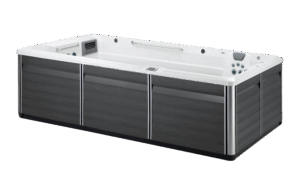
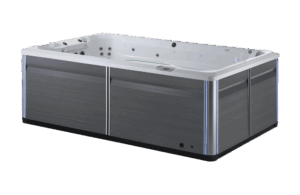
A swim spa is a larger, dual-purpose unit that combines a swim current system with a hot tub-style soaking area, often in the same vessel or as a dual-zone unit. Models at Take A Break Spas range from 13 to 20 feet in length. Water temperatures in the swim zone can be maintained anywhere from 60 degrees F to 104 degrees F depending on how you’re using it.
The defining feature is the swim current. The Jacuzzi X2000 Swim Spa uses an exclusive SwimCross airless jet system that provides variable resistance, keeping swimmers lifted and supported through full laps regardless of fitness level. That same 20-foot unit includes a dedicated hydrotherapy seating area with four distinct massage jets, so the family swimmer and the spouse who just wants to soak after work can use the same product at the same time.
Swim spas are also significantly more versatile from a seasonal standpoint. In Utah’s hot summers, you cool the swim zone to 70 degrees F and use it as a pool. In January, you crank the heat and use the spa zone for hydrotherapy. Families with children get a year-round recreation option that a standard hot tub simply cannot offer.
Take A Break Spas carries Jacuzzi Swim Spas, Cal Spas Swim Spas, and the AquaPlay 13FFP, covering a range of price points and footprint options for Utah homeowners.
Hot Tub vs. Swim Spa: Approximate Comparison (based on avg cost and household)
| Feature | Hot Tub | Swim Spa |
| Typical Price Range | $4,000 – $22,000 | $15,000 – $45,000+ |
| Footprint | 6×6 to 8×8 ft | 10×13 to 8×20 ft |
| Hydrotherapy Quality | Excellent (targeted jets) | Good (varies by model) |
| Swim / Exercise Capability | No | Yes |
| Monthly Energy Cost | $30 – $65 | $80 – $200 |
| Water Volume | 200 – 500 gallons | 1,000 – 2,500+ gallons |
| Summer / Cool Use Option | No (heat only) | Yes (adjustable temp) |
| Installation Complexity | Low to moderate | Moderate to high |
| Best For | Relaxation, hydrotherapy, couples | Families, fitness, year-round versatility |
Five Questions to Figure Out Which One You Actually Need
1. Are you primarily looking to relax and decompress, or do you want to exercise?
If your main goal is unwinding, stress recovery, and muscle relief, a hot tub delivers a better experience for less money. The hydrotherapy jet systems in mid-range and premium Jacuzzi hot tubs are purpose-built for therapeutic massage in a way that swim spa seating zones aren’t designed to fully replicate.
If you want to swim laps, do water aerobics, use resistance bands, or keep the kids active year-round, a swim spa is the right choice. You cannot swim in a hot tub.
2. How much space does your backyard actually have?
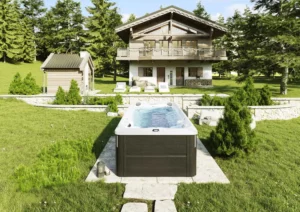
A DreamMaker Comfort 2300S hot tub at 82 x 82 inches fits on most Utah patio spaces without significant site work. A 13-foot swim spa requires a reinforced pad, adequate clearance, and often crane access for delivery. A 20-foot model like the X2000 needs substantial backyard real estate and a professional installation plan. Be honest about what your yard supports.
3. What is your realistic total budget including installation?
A mid-range hot tub at $10,000 with $2,000 in installation is a $12,000 project. An entry-level swim spa at $18,000 with $4,000 to $6,000 in site prep, electrical, and delivery is a $22,000 to $24,000 project. Both are financeable, but they’re different financial commitments.
4. Do you have children who will use it?
If yes, a swim spa’s recreational value multiplies the investment significantly. Kids will use a swim spa for games, summer cooling, winter heating, exercise, and family time. A hot tub is not a safe product for young children and is limited in recreational scope for older kids. Families with children ages 5 to 16 almost universally get more from a swim spa.
5. How often will you realistically use it?
Daily use strongly favors a hot tub for its simplicity and lower operating cost. The less complex the product, the more likely you actually use it every day. Swim spas require more maintenance time per week and cost more to heat. If you’re a daily user primarily seeking relaxation, the added complexity of a swim spa may reduce rather than increase how often you get in.
The Utah Angle: Year-Round Versatility Matters Here
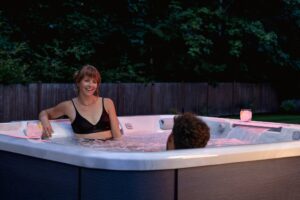
Utah’s climate is one of the strongest arguments in favor of swim spas for families. The high desert climate gives you 300+ days of sunshine, hot summers, and serious winters. A swim spa that runs cool in July and warm in December earns its footprint 365 days a year in Utah in a way it doesn’t in climates with milder temperature extremes.
Cal Spas Swim Spas at Take A Break Spas are specifically noted for handling Utah’s changing seasons with durable materials and consistent performance. The weatherproof, fireproof cabinets are built for this climate, and the dual-temperature range (40 to 104 degrees F) means you get genuine year-round function without a second thought.
Frequently Asked Questions: Hot Tub vs. Swim Spa
Can a swim spa replace a swimming pool in Utah?
For most Utah families without the yard space or budget for an inground pool ($50,000+), yes. A 20-foot swim spa provides year-round swimming, water exercise, and family recreation at a fraction of the cost, and it operates in winter, which a pool does not.
Which is cheaper to maintain, a hot tub or a swim spa?
Hot tubs are significantly cheaper to maintain. Less water volume means fewer chemicals per treatment, less energy to heat, and simpler filtration cycles. A well-run hot tub costs $50 to $100 per month total. A swim spa runs $100 to $200+ per month depending on usage and season.
Is a swim spa harder to install than a hot tub?
Yes, meaningfully so. Swim spas are heavier, longer, and often require crane placement, a larger reinforced concrete pad, and more significant electrical work. Plan an additional $2,000 to $6,000 in installation costs over a comparable hot tub project.
How long do hot tubs and swim spas last?
A quality Jacuzzi hot tub or swim spa with regular maintenance lasts 15 to 20 years. DreamMaker units carry a five-year structural warranty. Mid-range and premium Jacuzzi models carry more comprehensive coverage. Regular maintenance, water chemistry management, and cover care are the primary factors in longevity.
Which One Should You Buy?
Here’s the plain answer:
Buy a hot tub if: you want daily therapeutic soaking, your priority is stress and muscle recovery, your space is limited, and you want simple, low-cost ownership.
Buy a swim spa if: you have a family, want year-round recreation and swimming, have the yard space and budget for a larger installation, and want one product that replaces both a pool and a spa.
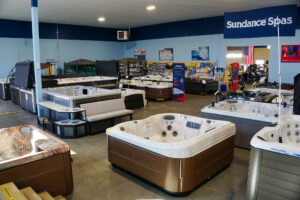
Both options are available at Take A Break Spas locations across Utah. The team can walk you through a wet test on any model in stock so you know what you’re buying before the delivery truck arrives.
Explore hot tubs and swim spas at takeabreakspas.com or visit your nearest Utah (West Jordan, American fork or Springville) showroom.